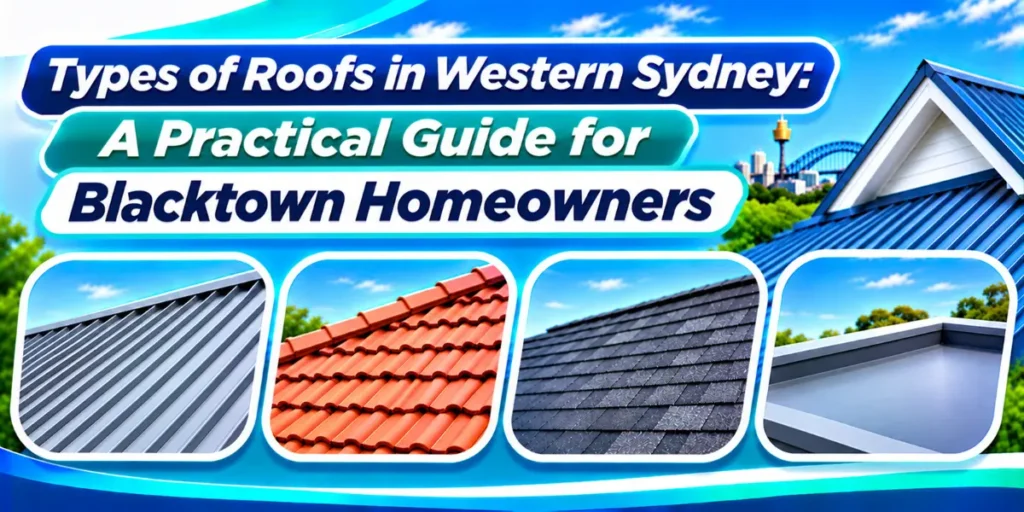
Types of Roofs in Western Sydney: A Practical Guide for Blacktown Homeowners
The roof on a typical home located in Blacktown or throughout Western Sydney does a lot more than most. Many summer days exceed 40 degrees Celsius; storms often hit unannounced; and some hailstorms can cause significant damage to the roof in just a few minutes. Selecting the proper roof for your home is not only about its appearance. It has a direct impact on how comfortable your home will be in January, how often you may need to call someone to repair your roof after a storm, and how much value your home will have when you decide to sell.
The following article provides a brief overview of the primary types of roofing materials used in Blacktown, along with their advantages and disadvantages, and will help you determine which option best fits your home. This article was written by the experts at Prestige Roofing Solutions, a Blacktown based roofing contractor that has provided quality roofing services to homes throughout the Sydney area for over ten years.
Why Western Sydney Roofs Need Extra Thought
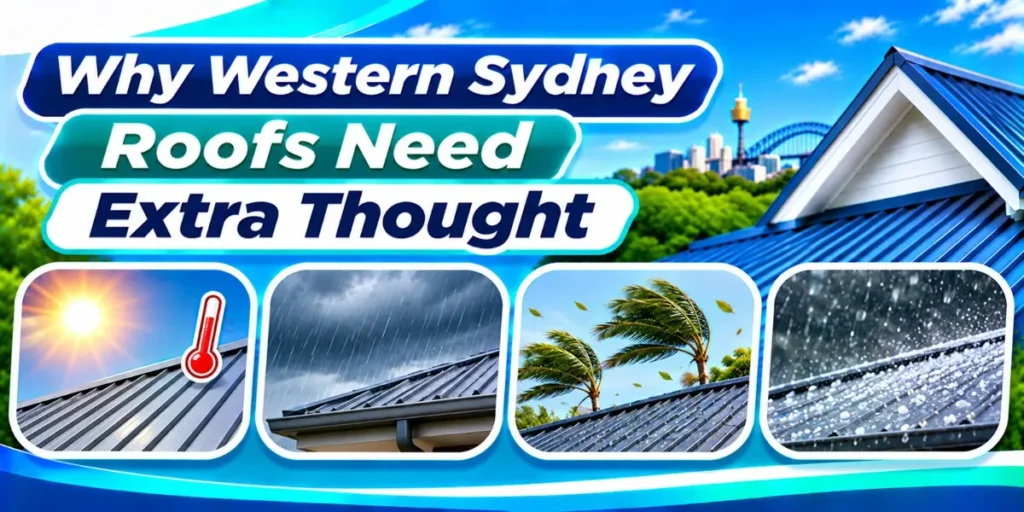
Because Western Sydney is located inland from the coast, it does not get the cool sea breeze like the other parts of Sydney. This makes for much hotter summers, larger temperature differences from day to night, and a roof that will spend most of its time in direct sunlight. Also, with the heavy summer rains and high winds from storms, the roof must endure quite a bit.
Three things matter most when you compare options here:
- The amount of heat that the material absorbs, reflects, and/or retains, as well as the quality of the insulation and ventilation in the roof space are what determines how well heat is managed.
- Storm resistance: how the roof will perform under extreme weather conditions (wind, heavy rain, hail) and how simple it is to repair after damage.
- Long term costs – not only what it costs at first, but also maintenance, repairs, and how long you could reasonably expect to use it.
The Most Common Roofing Materials in Blacktown
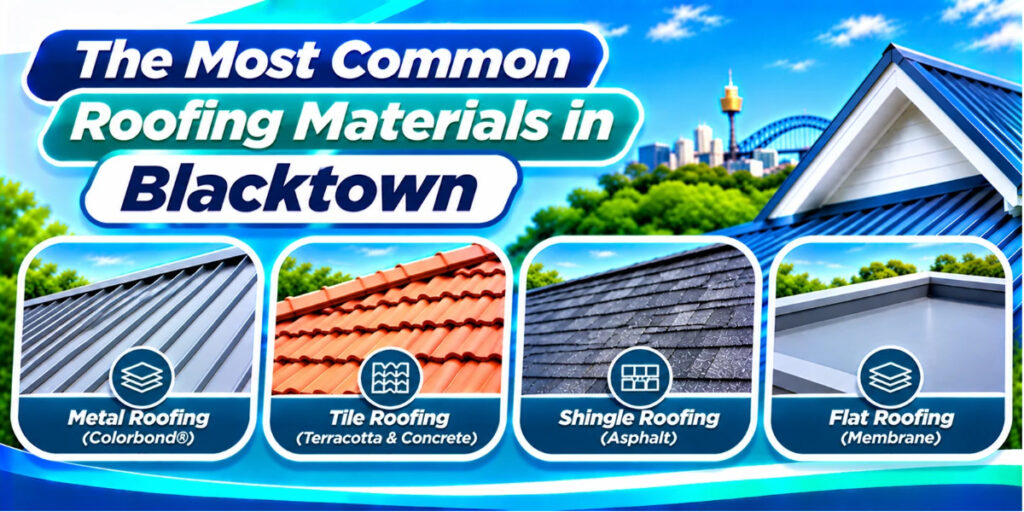
Walk through nearly every Blacktown street and you’ll find the same three materials over and over again; Concrete tiles, Colorbond steel and Terracotta tiles. This is how those three materials are used in real life.
Concrete Tile Roofs
Concrete tiles form the foundation for many suburban homes in Sydney. There is a vast number of homes in Blacktown that were constructed with these types of tiles starting in the 1980s. They are still considered to be a viable and practical option.
What works well
- Strong, long-lasting and well proven in Australian conditions.
- Good thermal mass, which helps smooth out temperature swings inside the home.
- Wide range of profiles and colours.
- A damaged tile can usually be swapped out without redoing the whole roof.
What to watch
- Heavy, therefore the roof frame must be compatible, which is important when considering alternative material options.
- Tiles can crack from impact or fall out of place in severe weather.
- The ridge cap, as well as the mortar used to attach it to the roof, may degrade as a result of exposure to the elements and other factors, leading to the development of potential leak points.
- Lifespan: typically 40-50+ years, depending on proper installation and care.
Colorbond Steel Roofs
One of the most used roofing materials in Australia today is called Colorbond. Colorbond is used on many types of construction projects such as new builds, additions to existing structures and replacement of old roofs. Colorbond is a light weight steel product that has been coated with a protective layer after it has been baked into place. There are also several different color options available for Colorbond.
What works well
- Light weight puts less load on the roof structure.
- Faster to install than tiles on most jobs.
- Low day-to-day maintenance.
- The use of lighter colors will reflect more heat and this can be a great help with the hot summer temperatures that occur in Western Sydney.
- Clean, modern look that suits newer homes and renovations.
What to watch
- The noise of rain or hail can be quite loud when it falls on your home’s roof, especially if there isn’t enough insulation underneath.
- A severe hailstorm can dent sheets.
- Deep scratches in the coating must be repaired immediately to prevent the development of corrosion.
- The standard life span of a particular product is usually 30 to 50 years. This can vary based on where you live, what type of product it is, and how well you maintain it.
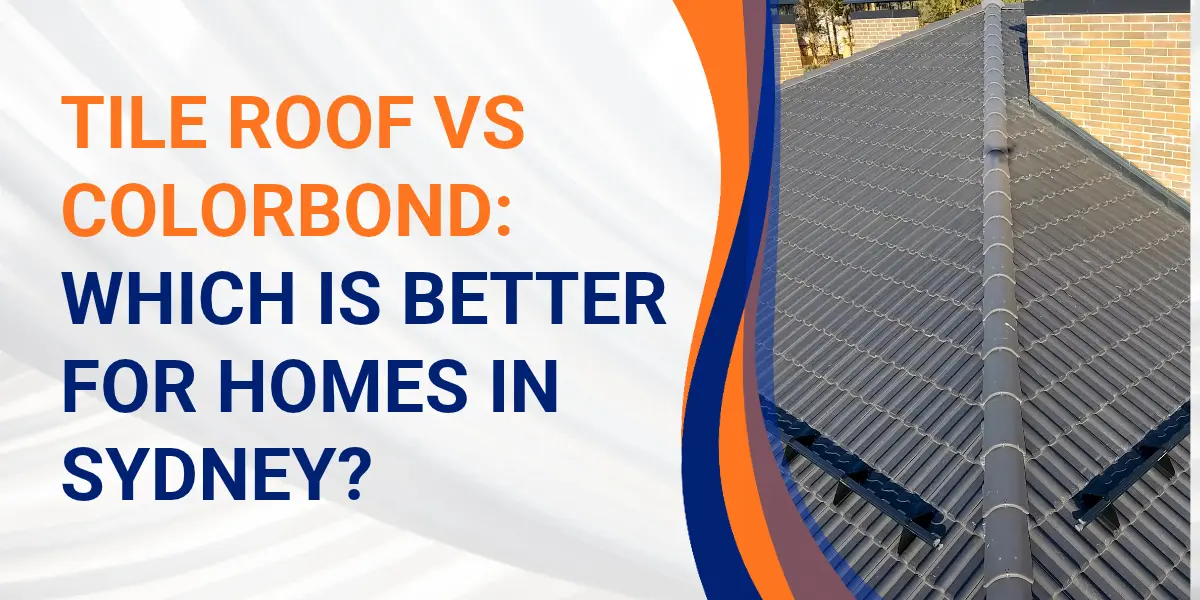
In addition to checking out our Colorbond Roofing Service, also take a moment to compare Colorbond vs Tile Roofs in Sydney, to see what the cost and trade off differences are.
Terracotta Tile Roofs
Terracotta tiles are produced using natural clay that has been baked in a kiln at high temperatures. These types of tiles are suitable for use on historic homes and those individuals who wish to create a timeless, high-quality look for their home.
What works well
- Natural colour that holds up well against sun fading.
- Very long service life.
- Good thermal mass.
- Low maintenance for the material itself.
What to watch
- Usually costs more than concrete tiles.
- If a person walks across the tiles incorrectly, they may become cracked; therefore, when making subsequent access for future tasks, it is necessary to take extra precaution.
- Heavy, so the roof structure must be able to carry it.
Typical lifespan: often 50 to 70 years, and sometimes longer.
If you currently have a tile roof, our tile roof installation team can either match the existing tiles or begin with new tiles.
Terracotta Tile Roofs
- Terracotta tiles are produced using natural clay that has been baked in a kiln at high temperatures. These types of tiles are suitable for use on historic homes and those individuals who wish to create a timeless, high-quality look for their home.
What works well
- Natural colour that holds up well against sun fading.
- Very long service life.
- Good thermal mass.
- Low maintenance for the material itself.
What to watch
- Usually it costs more than concrete tiles.
- If a person walks across the tiles incorrectly, they may become cracked; therefore, when making subsequent access for future tasks, it is necessary to take extra precaution.
- Heavy, so the roof structure must be able to carry it.
Typical lifespan: often 50 to 70 years, and sometimes longer.
If you currently have a tile roof, our tile roof installation team can either match the existing tiles or begin with new tiles.
Roofing Materials at a Glance
| Material | Typical lifespan | Heat performance | Maintenance | Often suits |
|---|---|---|---|---|
| Concrete tiles | 40–50+ years | Good thermal mass | Moderate | Traditional suburban homes |
| Colorbond steel | 30–50 years | Good with light colours and insulation | Low | New builds, renovations, re-roofs |
| Terracotta tiles | 50–70+ years | Good thermal mass | Low to moderate | Heritage and premium homes |
| Zincalume | Varies with exposure | Depends on insulation | Low to moderate | Sheds, garages, outbuildings |
| Slate | 75–100+ years | Good thermal mass | Low to moderate | High-end architectural homes |
| Membrane | Varies by system | Depends on design and insulation | Regular inspection | Flat and low-pitch roofs |
Lifespans are general estimates, not guarantees. Real-world results depend on product quality, installation, exposure, ventilation and upkeep.
Common Roof Shapes in Blacktown
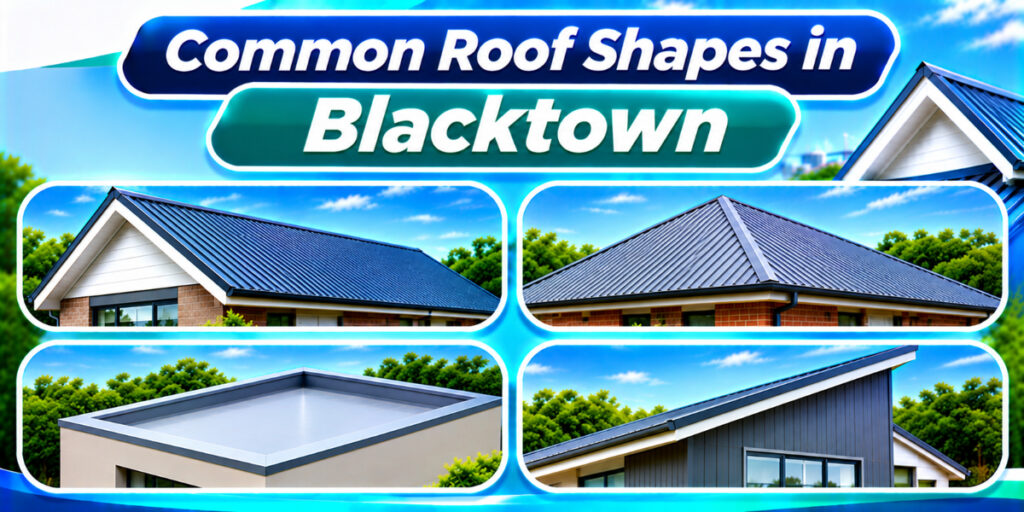
The material is just one part of the equation. Your roof’s shape will determine how water flows off of it, how well it stands up to the forces of wind, how much usable area you can use on top of it, and what your home looks like to those passing by.
Hip roof: A hip roof is a type of roof with four sloped sides which intersect at a single point (ridge). Hip roofs are common in Sydney’s suburbs due to their ability to provide good drainage, as well as being able to withstand strong winds if constructed correctly. Hip roofs can be used on either tiled or steel-framed homes.
Gable roof: A simple, inexpensive form of roofing that has two sloping surfaces which meet at a common point (the ridge) and are supported by triangular walls on either side. These types of roofs provide excellent ventilation for the roof area. They also require additional bracing due to their exposed nature to the wind.
Dutch gable roof: A hipped roof with a smaller gabled portion attached above the hipped section. This type of roofing system adds visual interest to a home and provides better ventilation for a home. This is one of the main reasons this type of roofing system has become increasingly popular among homeowners who desire a unique look for their homes.
Skillion Roof: A single sloped roof. Typically used for modern homes, additions to existing structures, parking spaces (carports) and outdoor living spaces. Colorbond is commonly used in conjunction with a skillion roof, allowing for greater ceiling height at the lower point of the slope.
A “flat” roof is not completely flat because it must be slightly sloped to allow for proper drainage. Typically found on residential additions and commercial structures, this type of roof is typically covered by a membrane. Regular inspections and adequate drainage will help prevent the accumulation of standing water.
Which Roof Suits Your Home?
The most suitable roof type for each home in Blacktown depends on individual circumstances. Some examples of typical roofing choices include:
- Older brick home with a tired tile roof, structurally sound:An old brick house with a worn-out tile roof can be restored by re-bedding, re-pointing, fixing damage and applying a new coat. This is usually much cheaper than replacing the entire thing.
- Roof leaking in several places or already repaired repeatedly: A complete roof replacement is often more cost-effective than making numerous repairs when there are multiple leaks or the same leaks have been repaired several times.
- New construction or large-scale remodeling: Colorbond is a common choice due to its light weight, fast installation process, and contemporary appearance.
- Heritage-style or premium home:If you’re looking for a heritage-style or premium home, terracotta tiles can work with your architectural design and your long-term plans.
- Hot upstairs rooms in summer: In order to reduce heat in the upper levels of your home during hot summer months, consider using lighter colored roofing materials, high-quality insulation, and adequate roof ventilation when making decisions about what type of roof you will install. These should be considered first rather than being added later on.
- Extension, patio or carport: Skillion roofs are often used when adding on to an existing home. They can be made from materials that match the rest of the house, so the addition looks like a natural extension of the home. We will design your carport and/or pergola to match the existing roofline and color scheme of your home.
Before You Replace a Roof in Blacktown
Assess for asbestos. Houses constructed prior to 1990 may contain asbestos-cement roofing, or other materials which contain asbestos. Do not cut, drill, scrub, or pressure wash any material that you believe contains asbestos. Typically in NSW, removal must be completed by professionals who are properly licensed and adhere to the guidelines set forth by SafeWork NSW. Prior to starting any works, if you are unsure whether a product has asbestos in it, have the product evaluated.
Check for approval. Usually, you don’t require an approval from your local council when you’re simply replacing the same type of roof; however, if you plan to alter the shape of the roof line or change the angle of the roof (pitch), work on a heritage listed property or build on to the existing structure, you should confirm with Blacktown City Council or the NSW Planning Portal regarding the applicable planning laws and regulations prior to beginning any construction.
Think about the whole roof system: Think about the entire roof system. The way your roof works will depend on the insulating materials, ventilation systems, gutters, flashings and other components that are used. At this time, it is also beneficial to consider installing guttering and/or gutter guards, as you have the necessary scaffolding or access available.
Plan for solar and skylights: Consider adding solar panels and/or skylights at some point in the future. Make sure to let the builder know this before the roof is installed so that he can install the correct materials and position things accordingly.
Quick Checklist: Choosing a Roof for Your Home
- Will the material and colour cope with Western Sydney’s summer heat?
- Can it stand up to local wind, heavy rain and hail?
- Does the style suit your home and street?
- Does your budget cover not just installation but long-term upkeep?
- Is the roof structure suitable for the weight of the material you want?
- Is it ready for insulation, ventilation and possibly solar?
- Have you checked for asbestos and confirmed any approvals needed?
If there are questions about these, the majority can be answered during a single visit for a full inspection.
Looking After Your Roof Once It's Done
Even the most durable roof requires a bit of maintenance. An annual inspection, and an additional inspection following heavy storms will allow you to find minor issues (such as slipped tiles, cracked ridge caps, raised flashing, or clogged gutters) before those issues develop into leaks.
Additionally, moss and debris accumulate rapidly on roofs in Sydney’s climate; therefore, hiring a professional to clean the roof, or having a continuous roof maintenance program will help preserve the integrity of the roof and lengthen its lifespan.
Frequently Asked Questions
What is the most common roof type in Blacktown?
Concrete tile and Colorbond steel are the most used materials for roofing. Concrete tiles are primarily found on older residential properties in the suburbs, whereas Colorbond steel is primarily used in new builds, renovations, and re-roofing projects.
Is Colorbond or tile better for Sydney's heat?
No one option will win. A light colorbond roof with good insulation and proper ventilation is effective, while tiled roofs provide high levels of thermal mass. What is best for you depends upon the type of home you have, the amount of money you are willing to spend, and the length of time you intend to live there.
How long does a roof last in Western Sydney?
The general rule of thumb for how long different types of roof tiles can be expected to remain functional is: Concrete – 40 to 50 years Terracotta – 50 to 70 years or longer Colorbond – 30 to 50 years The installation of the tiles and the level of care given to them are major factors that will affect the lifespan of each type.
Do I need council approval to replace my roof?
Sometimes. A simple “like-for-like” exchange of components is usually very simple, however, alterations to the roof line, pitch of the roof, historic listing and other planning requirements may alter this. First contact either Blacktown City Council or the New South Wales Planning Portal.
Should I restore or replace my roof?
If the roof is structurally sound and the issues are primarily caused by wear and tear (aging, fading, moss, etc.), then restoration is typically the less expensive alternative. Conversely, if there are numerous leaks in different areas of the roof, or if the roof has required multiple repairs over a period of years, replacing the entire roof may be more cost-effective in the long run.
What colour roof keeps a house coolest?
Lighter, highly reflective colors will usually absorb less heat. Proper insulation and ventilation combined with lighter, highly reflective colors will help improve the indoor temperature during hot summer months.
Conclusion
There is not one type of roof that will work perfectly for all homes in Blacktown. All concrete tiles, Colorbond steel and terracotta can be used to make excellent roofs if they are installed correctly and kept in good repair. The type of roof you should select is determined by your home’s appearance, your financial situation, the length of time you intend to live in your home and how you would like your roof to withstand the extreme temperatures and severe weather conditions we experience here.
Talk to a Local Roofer
Unsure of what to choose for your residence? Prestige Roofing Solutions is located in Blacktown and provides services for both residential and commercial properties in Western Sydney as well as other areas. After we assess the condition of your roof, we will discuss with you the various alternatives available to you in simple terms and provide a formal written estimate of costs prior to starting any project. All estimates and assessments are provided free of charge, with no contractual commitments. Additionally, all new roof installations have a seven-year warranty on workmanship.
Prestige Roofing Solutions Pty Ltd 22 Pembroke Street, Blacktown, New South Wales 2148.
Telephone Number: +61 407 462 014
Email Address: sales@prestigeroofingsolutions.com.au
Operating Hours: Monday through Friday from 7:00 am until 5:00 pm, Saturday from 8:00 am until 1:00 pm, Closed on Sunday