Roof Ventilation, Because a Roof That Can't Breathe Wears Out Faster

Trapped heat and moisture in a roof cavity do real, ongoing damage, to insulation, timber, even the roofing material itself, and most homeowners never know it's happening until something's already gone wrong. Prestige Roofing Solutions installs roof ventilation across Sydney, on tile and Colorbond roofs, new builds and retrofits alike. Based in Blacktown.
Schedule a Booking

Signs Your Roof Needs Better Ventilation

Upstairs rooms noticeably hotter than the rest of the house, especially in summer, is usually the first thing people notice, that heat’s coming from a roof cavity with nowhere for hot air to actually escape. Condensation or dampness in the roof space, particularly visible in winter, points to moisture getting trapped rather than venting out, and that moisture sits against timber and insulation over time.

A musty smell in upper rooms or from manhole access can mean the same thing, trapped damp air with poor airflow to clear it. And if your energy bills spike hard over summer despite decent insulation, poor ventilation is often part of what’s working against it.

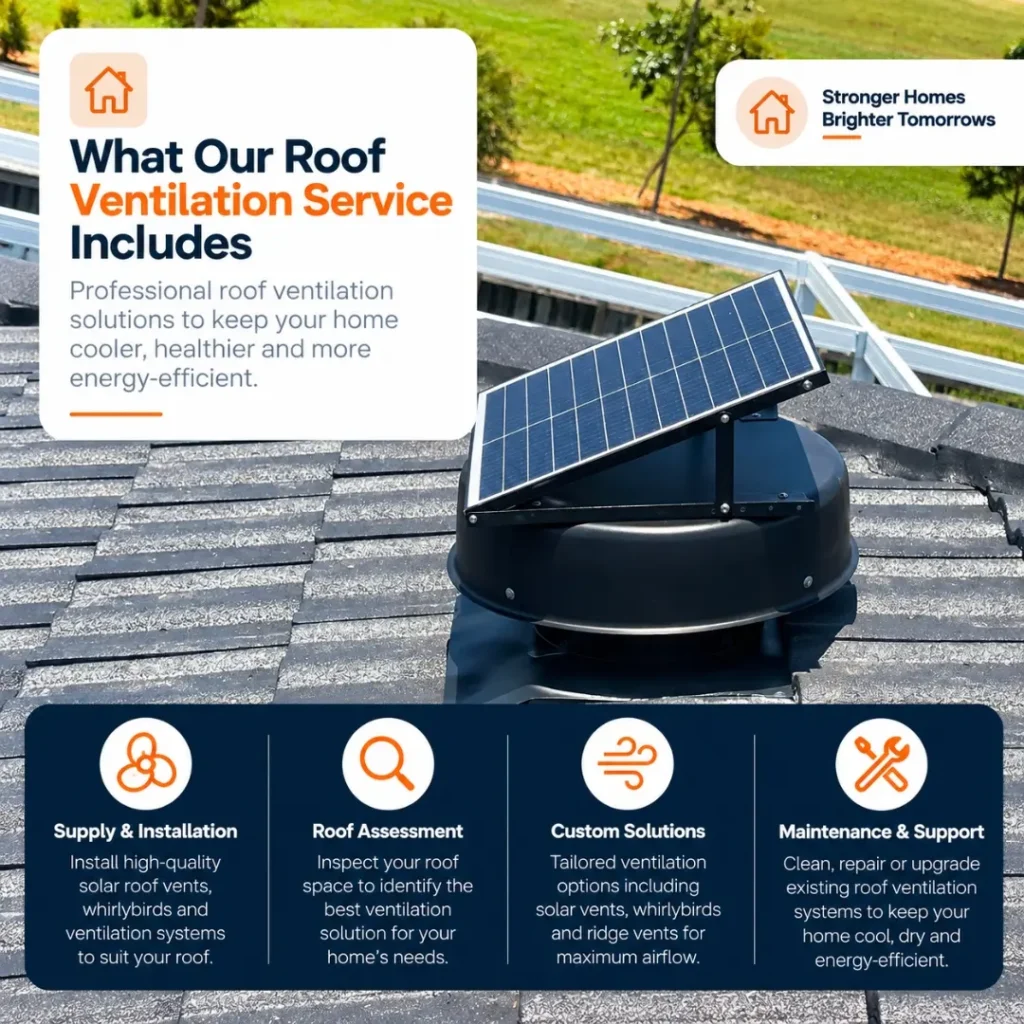
What Our Roof Ventilation Service Includes

ROOF 11

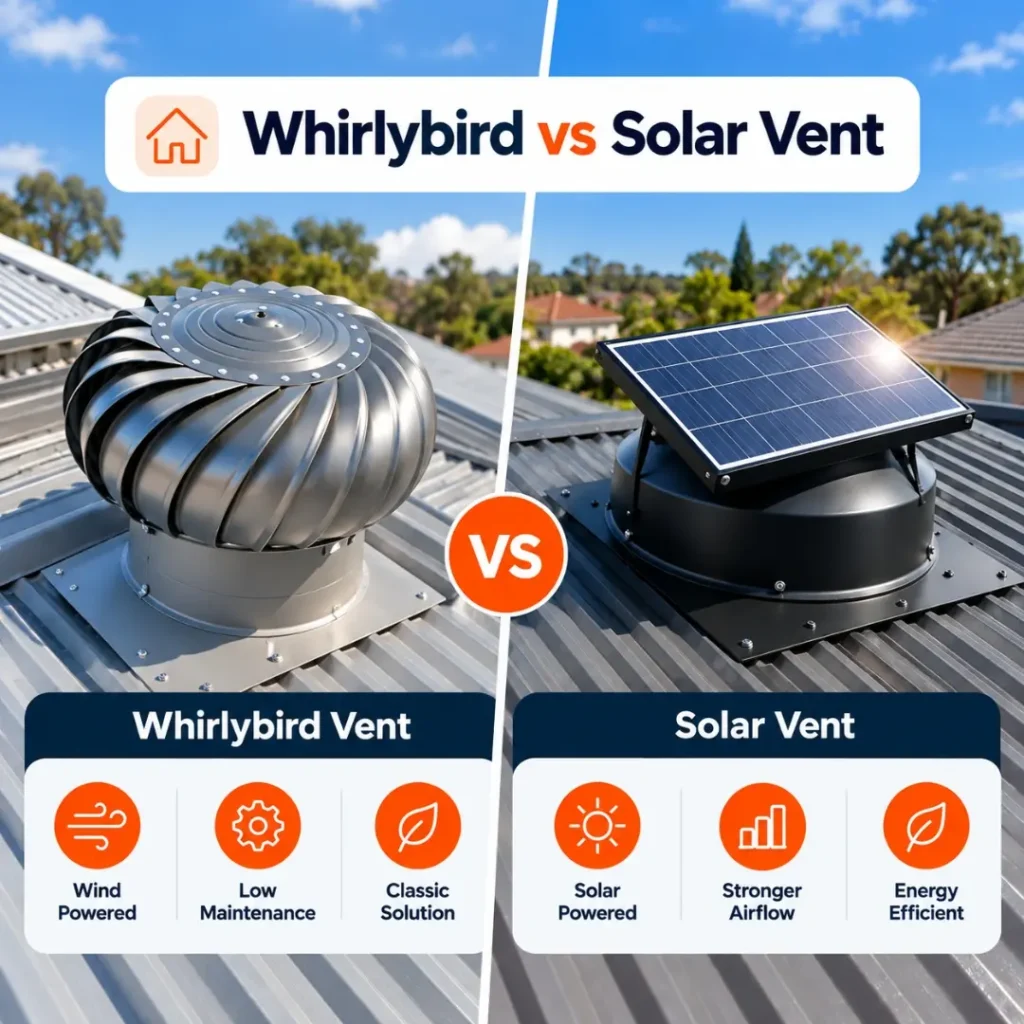
Whirlybird vs Solar Vent

ROOF 12

Whirlybird

Whirlybirds spin with wind movement across the roof, pulling hot air out of the cavity as they turn. They need no power and work well on most Sydney properties, but they’re less effective on very still days when there’s no wind to drive them.

Solar Vent

Solar-powered vents run off a small solar panel and work regardless of wind, pulling air out continuously whenever there’s daylight. They cost more upfront but tend to be the better option for properties in more sheltered spots, or where consistent ventilation matters more than upfront cost.
Neither’s universally better, it comes down to your specific roof’s wind exposure and how much you’re relying on ventilation to manage heat versus just moisture.

How Many Vents Does My Roof Need?

This depends on roof cavity size and current airflow, not a fixed number that applies to every house. Too few vents and you're not getting meaningful airflow, too many for a small roof space is wasted cost. We calculate this properly during inspection rather than defaulting to whatever's standard, since an undersized or oversized system doesn't do the job it's meant to.

What to Weigh Up Before
You Install Roof Ventilation

3

Current Insulation

Ventilation and insulation work together, not as substitutes for each other. If insulation's poor, ventilation alone won't fully solve a hot upstairs, worth having both assessed together.

4

Roof Type

Tile and Colorbond roofs take ventilation differently, whirlybirds and vents fit and seal differently depending on which you've got, this affects both installation and how well it seals against leaks.

2

Wind Exposure

A property that's sheltered by trees or neighbouring buildings might not generate enough wind for whirlybirds to work well, which is exactly the situation where solar vents make more sense.

3

Council Approval

Adding vents to an existing roof is generally low-impact enough to not require council approval in NSW, though this can vary by property, worth confirming for your specific situation.

5

Council Approval

In NSW, a like-for-like roof replacement, same footprint, same pitch, similar material, is usually treated as exempt or complying development and doesn’t need a full development application. Changing the roof’s profile, raising its height, or switching to a materially different roofing type can trigger council approval requirements. It’s worth checking with your local council, or asking your roofer to flag it, before work starts, since the rules vary a bit between council areas.

6

Repair or Replace? How to Decide

The short version: if the damage is localised, a handful of tiles, one section of flashing, a single leak, repair usually makes sense. If the problems are spread across the whole roof, keep recurring after previous repairs, or the roof is old enough that patching one area just means the next failure is somewhere else, replacement is the better long-term call. A roofer who’s actually looked at your roof can give you a straight answer either way, rather than a guess based on age alone.

roof replacement 2

Timing and Storm Season

Sydney’s storm season generally runs from around November through to March, and that’s when hail and heavy rain do the most damage to ageing roofs. If your roof is already borderline, getting it replaced before storm season starts is usually smarter than waiting to see what a bad storm does to it.

Our Roof Ventilation Process

We care for your roof as if it were our own.

Assessment

We check current airflow, insulation condition, and wind exposure before recommending a system.
Step 1

Calculate what's needed

Number and type of vents worked out based on your actual roof cavity, not a standard default.
Step 2

Installation

Vents fitted and properly flashed and sealed into the roof, whether that's whirlybirds, solar vents, or ridge ventilation.
Step 3

Seal check

We confirm everything's watertight before calling the job done, a vent that leaks is worse than no vent at all.
Step 4

Final walkthrough

We explain what's been installed and what difference to expect, particularly through the next summer.
Step 5

Frequently Asked Questions

Straight answers to help you make the right decision for your home.

Yes, on most Sydney properties with reasonable wind exposure. They’re passive and low-cost, and noticeably reduce trapped heat in a roof cavity over summer.

Solar-powered vents are usually the better option, they run off daylight rather than wind, so they keep working even on still days.

Depends on your roof cavity size and current airflow, there’s no universal number. We calculate this during inspection rather than guessing.

It can help, particularly in summer, since less trapped heat means less strain on cooling. It works best alongside decent insulation, not as a replacement for it.

Usually not for adding vents to an existing roof, though it can depend on your specific property.

Based in Blacktown, working across Hills Shire, French Forest, Inner West, North Sydney, Penrith, Wentworth Falls, Sutherland Shire, Liverpool, Richmond, and Windsor.

Our Clients Love Us